
Rhoda Fromme
Heritage & Home
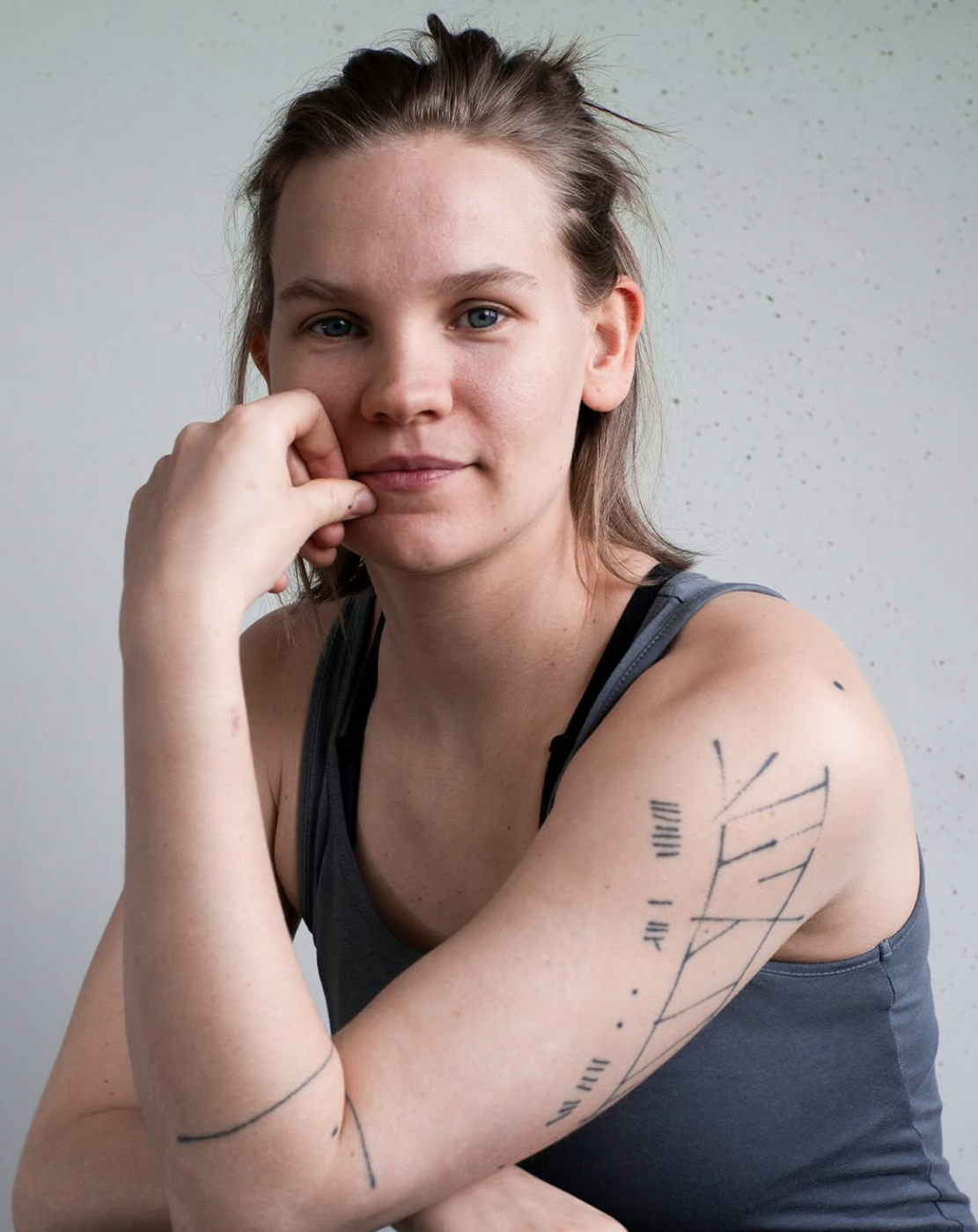
Based in Berlin, Germany, tattoo artist and museum conservator Rhoda Fromme aims to create community through ancestral tattooing. Unlike many other cultures (such as the Māori, Inuit, and Kalinga), much of Europe lacks connection to ancient tattooing – the closest the continent has is Ötzi, a mummy from five thousand years ago. Despite the relative gap in archaeological or oral historical tattooing evidence, Fromme bases her tattooing practice on artifacts relevant to her clients’ background, inventing a visual system connecting people to their communities and ancestries.
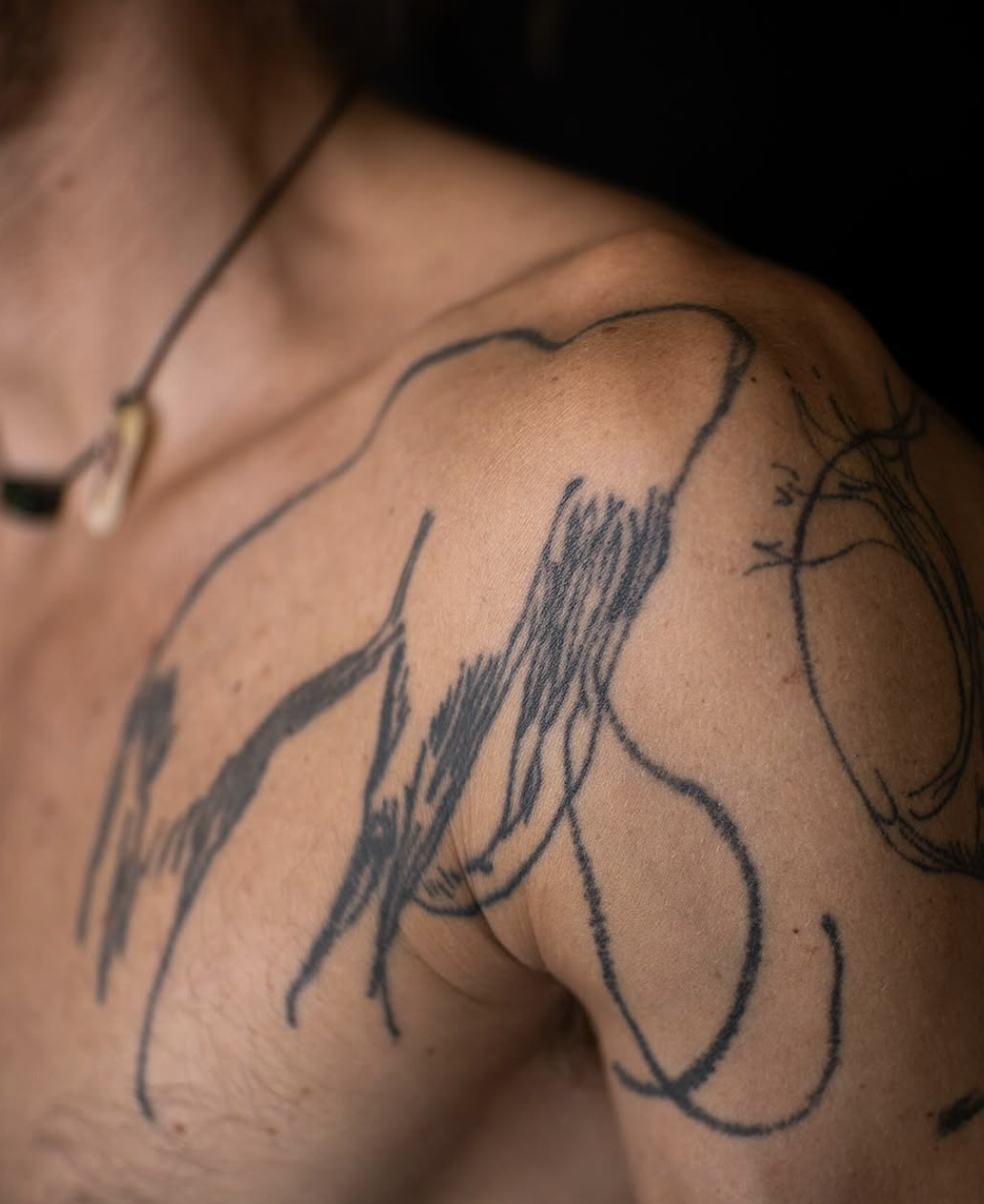
“If you feel disconnected, stop appropriating. Look into your own archaeology and heritage. There’s archaeology everywhere.”
Studying tattooing and conservation simultaneously made the two intrinsically entangled for Fromme; working with and restoring archaeological artifacts gave her access to the patterns and motifs repeated throughout European prehistory and inspired her current work. This dual background allows her to work as a bridge between academics (such as Aaron Deter-Wolf) and practitioners. Functionally translating the interacting knowledge bases, Fromme allows for tattoo archaeology to take the form it does today. Rather than becoming an expert in tattoo archaeology or experimental tattooing, Fromme’s proficiency in both realms shapes what we understand of ancient tattooing today.
In her own practice, Fromme emphasizes ancestry and visual culture – the first tattoo she ever made was inspired by a Danish Bronze Age petroglyph. Refusing to make tattoos based on visual culture not present in her own heritage or her client’s, Fromme personalizes her artistry. For instance, one potential client requested a Viking-inspired tattoo, despite not having any Scandinavian ancestry. Instead, Fromme provided him with examples of possible designs based on archaeological artifacts from his hometown. This connection to homeland and heritage enthralled the client, who ended up choosing one of Fromme’s designs to get inked. Taking this proprietorship over her artistry allows Fromme to dedicate her practice to her passions rather than commodifying her skillset and tattooing anything proposed. Staunchly disapproving of cultural appropriation through tattooing, Fromme instead offers a bodily connection to personal heritage.
Ideas of community and isolation in Berlin became exacerbated for Fromme after a trip to New York City. The neighborliness and deep sense of community obligation she observed deviated from social norms in Germany. However, seeing chance connections between clients – such as two rock climbers receiving the same tattoo — inspired Fromme to seek out and help to create community in a socially disparate city. According to the artist, these two clients were pleased to learn their newfound embodied connection with a fellow rock climber. In the globalized, transnational culture we experience today, Rhoda Fromme encourages rootedness within heritage and ancestral connection through her tattoo practice.