
Aaron Deter-Wolf
Engage Beyond Academia
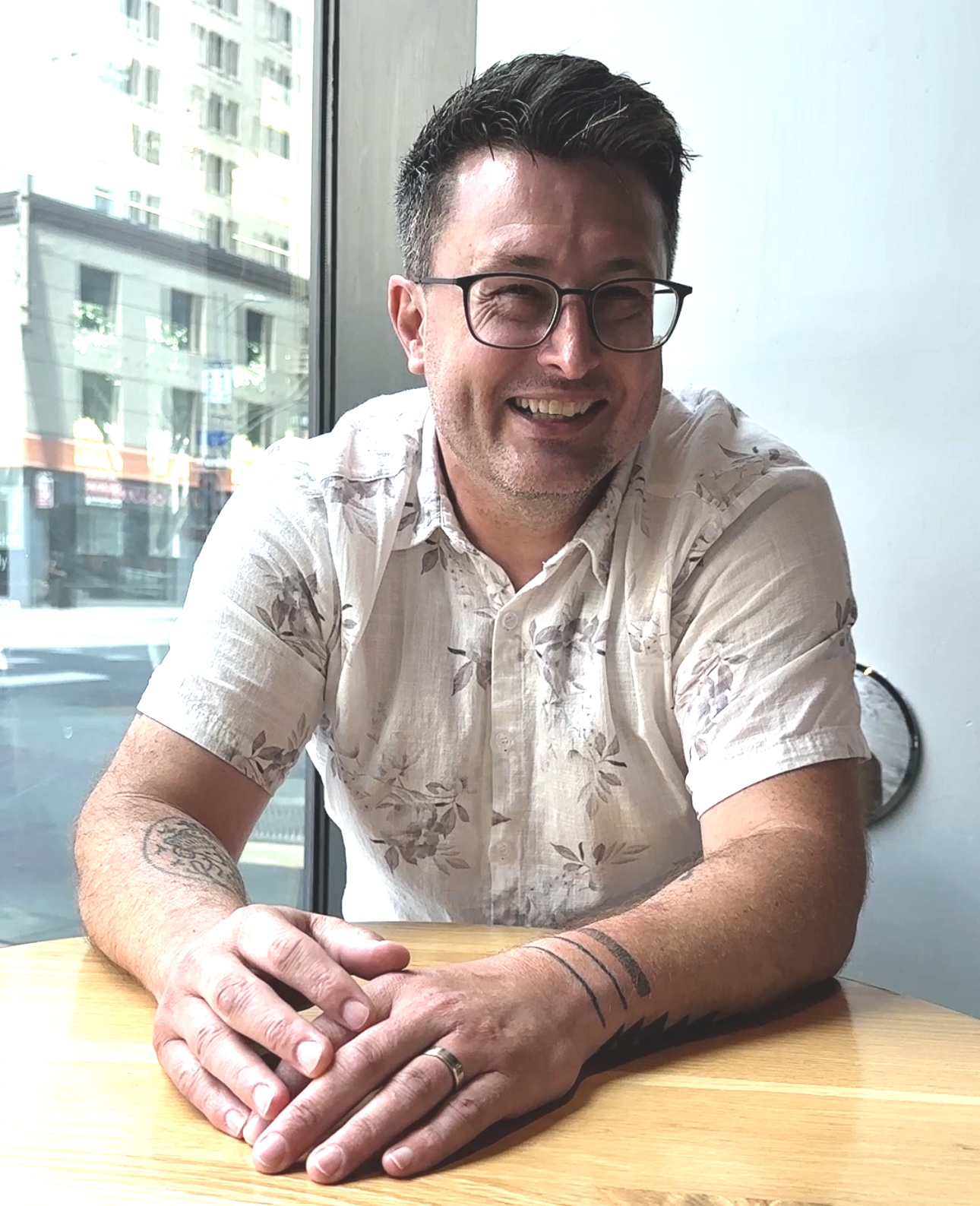
One of the foremost researchers in tattoo archaeology, Aaron Deter-Wolf foregrounds his investigations in community and accessibility. In an age where scholarly reports and articles are often behind paywalls, Deter-Wolf creates space for public education through open-access journals, podcasts, and lectures in pubs and tattoo shops. In his academic practice, he emphasizes the necessity of connections between archaeologists and tattooers to eschew research practices unengaged with community members, otherwise known as armchair anthropology. Often working in tandem with experimental prehistoric tattooer Daniel Riday, Deter-Wolf researches tattoo technology from the past five thousand years while calling in associated contemporary communities.
“Talking to the tattoo community, talking to practitioners, talking to Indigenous folks — that information matters to them”
Integral to his research, Deter-Wolf receives tattoos from Riday or tattoos himself using ancient methods and technology. Rather than following past conventions in which researchers tattooed pig skin (a biological proxy for human skin), Deter-Wolf puts himself under the needle. According to Deter-Wolf, this experiential, experimental technique is as crucial to his scholarship as it is for a foodways archaeologist to have cooked a meal. Creating these embodied connections between himself and his research subjects allows Deter-Wolf to more holistically understand and analyze prehistoric tattooing techniques. This intertwined sense of personhood and ancient tattoo iterations adds to potential interpretations of tattooing in ancient cultures.
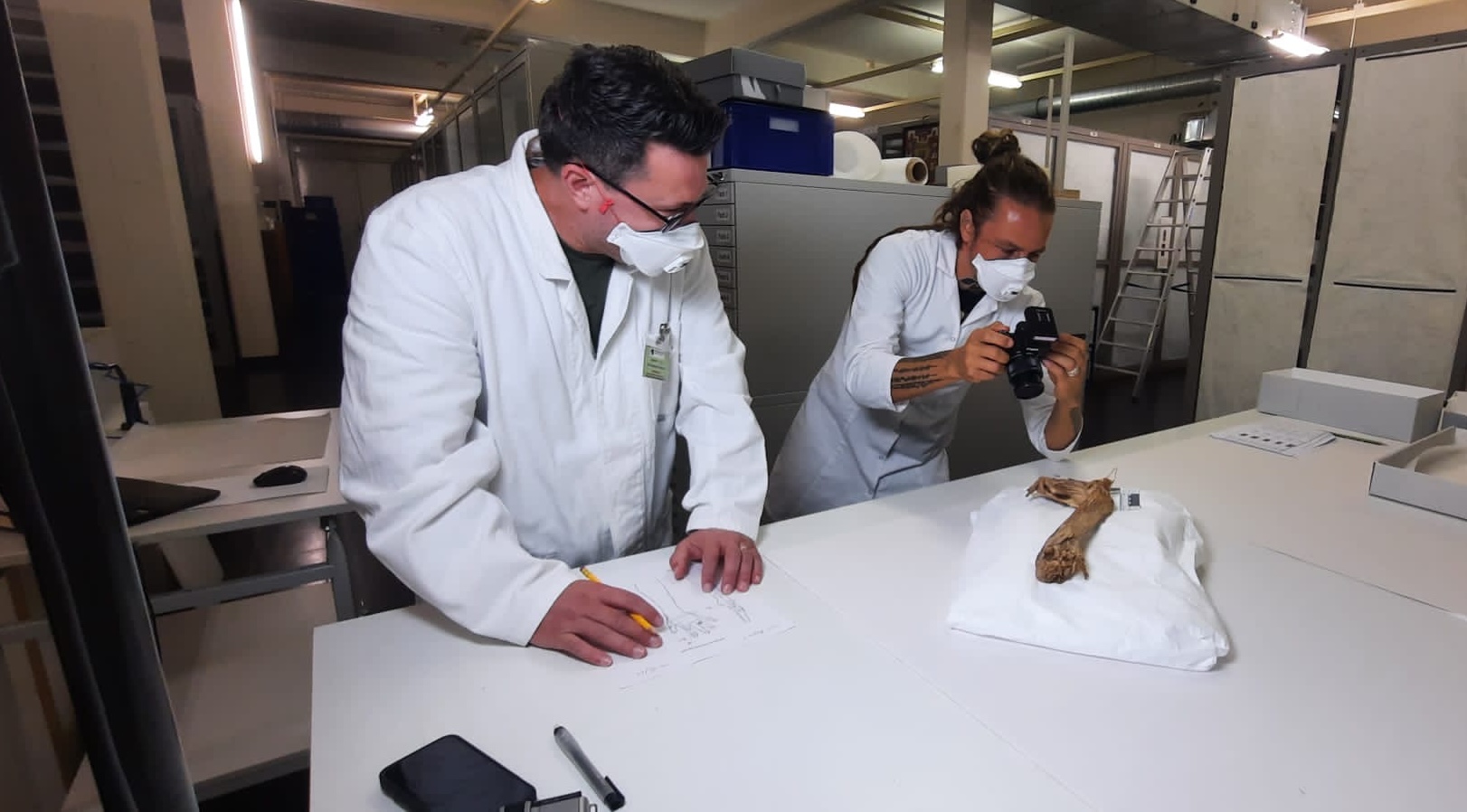
Most recently, Deter-Wolf (alongside his team of tattoo artists, archaeologists, and museum practitioners) has delved into infrared photography of Chancay mummies from Peru and Pazyryk mummies from the Altai mountains. In revealing inked designs long-since faded and all but invisible to us now, these researchers (particularly Riday) illustrate the mummies’ tattoos. With these open-access illustrations and a general spike in interest in ancient tattoos, larger swaths of people have acquired tattoos reminiscent of Pazyryk mummies and Ötzi the Iceman, among many other tattooed mummies.
According to Deter-Wolf, these tattoos approach a “squishy” area of appropriation. Without known living descendants for many of these groups (or at least any with living memory or active related practice), questions surrounding heritage and identity in culturally based tattooing arise. In Deter-Wolf’s opinion, teaching about the harms of appropriation won’t necessarily convince people against getting ancient tattoos. With the rise of New Age spiritual beliefs in ancient medicinal tattoo practices (which have been disproven in archaeology) and a greater general acceptance of tattoos, individuals seek to copy designs made famous by their mummified vehicles – only to end up copying the art of an archaeological illustrator.
In our conversation, Deter-Wolf ultimately emphasized the power of social relationships in his research. Whether it be from Riday, himself, or traditional Samoan practitioners, Deter-Wolf finds emotional connection and a physical bond through the act of tattooing. The intimacy and trust necessary to get a tattoo, and thus for Deter-Wolf to conduct his research, transcend the bounds of academic paywalls and conferences, leading him and his team to push for open-access forms of their research products.